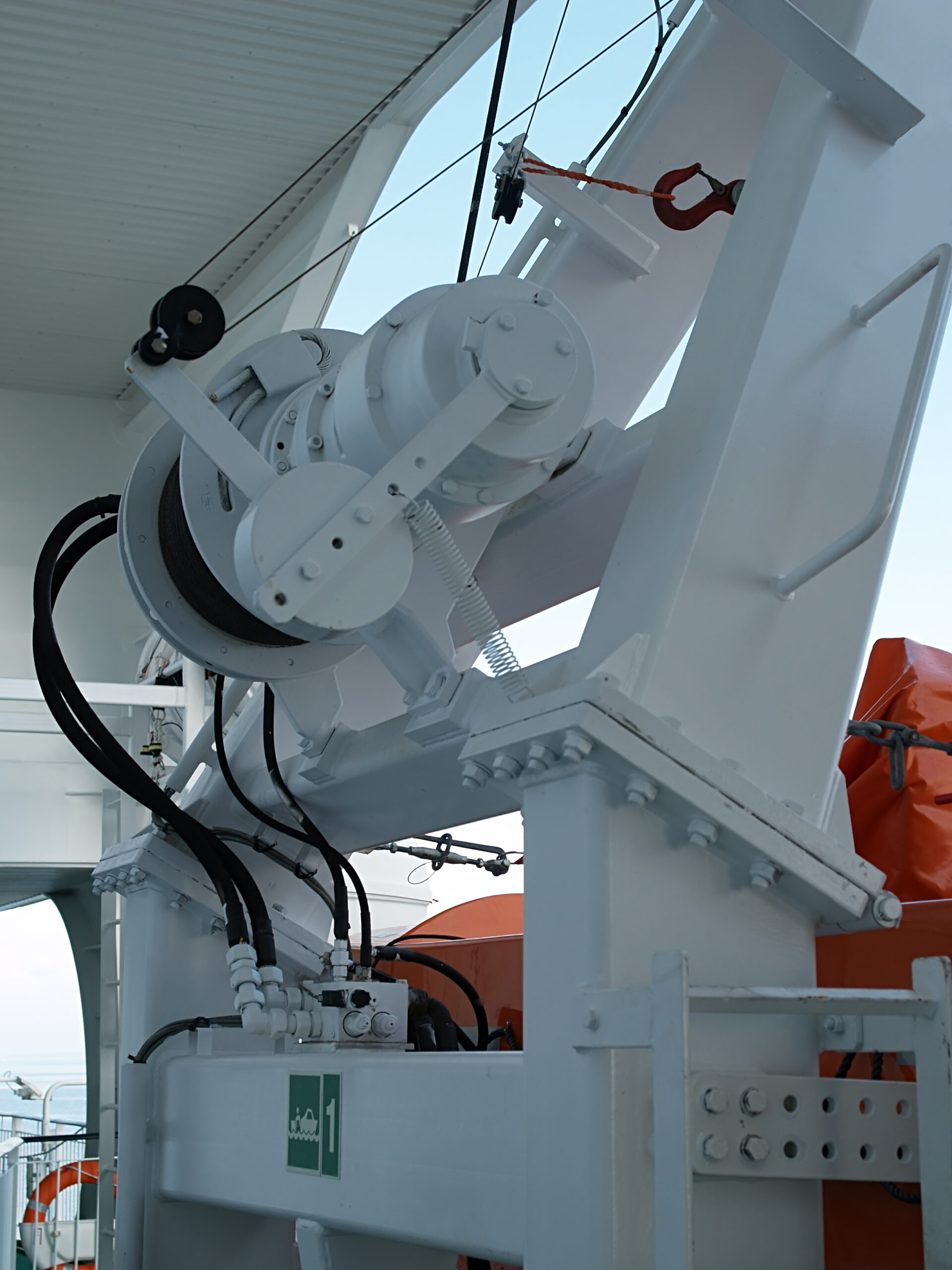
A 5-yearly lifeboat inspection lives or dies on the hook/release gear. If the mechanism isn’t right, nothing else matters. This is the practical checklist that gets you accepted on the first attempt.
Why hooks decide your pass in a 5-yearly lifeboat inspection
On-load and off-load release systems carry the biggest consequence of failure. Surveyors look for two things: proof the hardware meets maker data and proof the crew can return it to a safe, repeatable state. No gaps, no guessing.
Overhaul scope for a 5-yearly lifeboat inspection (pragmatic, maker-aligned)
-
Disassembly points: release hook body, locking pieces, pawls, linkages, springs, pins, bushes. Clean parts, remove contamination and corrosion.
-
Wear surfaces: measure against maker limits; record actuals. Replace out-of-tolerance parts.
-
Pins/bushes/springs: inspect for ovality, fretting, loss of elasticity; renew as per kit.
-
Reassembly: apply specified lubricants; set torques and clearances per manual; record values on the sheet.
-
Controls & linkages: adjust cable lengths/clevises to neutral positions; confirm full travel without binding.
Evidence you must capture (photo cues)
-
Serial/nameplate close-ups; one wide shot tying plate to the actual hook.
-
Before/after of worn parts; ruler or gauge in frame.
-
Reassembly: torque wrench in use; value shown; fastener ID visible.
-
Final state: hook body, latch, indicators, safety pin seating.
Functional verification (under control, not drama)
-
States: armed, reset, tested. Photograph each with indicator and control in frame.
-
Interlocks: prove they block unintended release; show tag or marker.
-
Release tests: controlled activation in accordance with maker procedure; demonstrate full reset to safe, repeatable condition.
-
Evidence photos: positions, indicators, tags, and the person responsible signing the test step.
-
Reference: align language with MSC.402(96) and the maker’s procedure ID.
Handover to the crew (what surveyors ask)
Can the team demonstrate armed/reset on command, identify the safety pin status, and explain the interlock in one sentence? If yes, you’re through.
Paper that convinces (what gets accepted)
-
Parts list used (kit number, batch/serials), quantities, and disposition of removed parts.
-
Torque/clearance table with maker limits and measured values.
-
Calibration refs for instruments (torque wrench, calipers); cert IDs and due dates.
-
Procedure references: maker manual section, company SMS procedure code, MSC.402(96) mention.
-
Sign-offs: technician, verifier, master’s acknowledgement; timestamps.
-
Photos index: ID ↔ checklist line ↔ measurement table row. File names that sort:
YYYYMMDD_Vessel_Hook_Step_###.jpg.
Typical findings & fast fixes
-
Misadjusted linkages: unequal travel; reset to neutral, re-pin, re-test, photo proof.
-
Worn locking pieces: out of limit; replace from kit, re-measure, document.
-
Contamination in latch path: clean, re-lubricate with specified product, re-verify reset.
-
Indicator out of sync: adjust per manual until indicator matches latch state; capture armed/reset frames.
-
Missing proof of torque/clearance: add table row and photo with value visible; cross-reference.
Quick checklist for a class-accepted report
-
Hook model/serial, vessel/IMO, port/date, scope reference.
-
Disassembly photos, measurements against limits, replaced parts log.
-
Reassembly torques/clearances with calibration references.
-
Armed/reset/tested states with indicators and safety pins.
-
Interlock demonstration and short crew brief note.
-
Evidence summary page and sign-offs.
-
Alignment call-outs: MSC.402(96) + maker manual section + company SMS code.
Book 5-yearly in Klaipėda — hooks, winch, proof-load, class-accepted report.
Baltic & North Sea coverage: Klaipėda, Riga, Tallinn, Gdańsk, Gdynia, Helsinki, Kotka, Turku, Stockholm, Gothenburg, Malmö, Copenhagen, Aarhus, Oslo, Bergen, Hamburg, Bremerhaven, Rotterdam, Amsterdam.