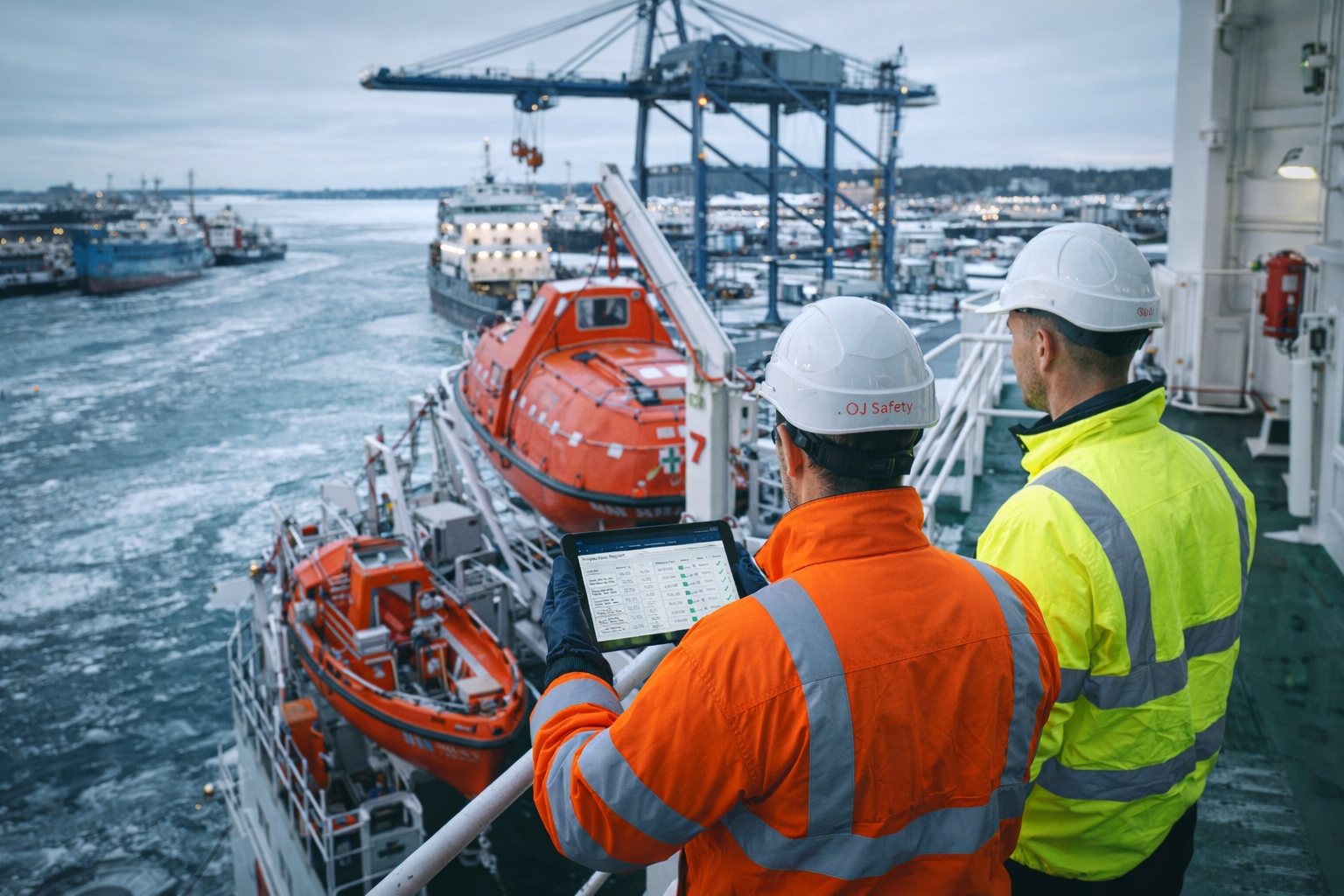
The Baltic moves fast. Turnarounds are tight, and paperwork must keep up. We started in Klaipėda as an ISO 9001 certified maritime safety company with one promise: the same standard, every time, in every port. From one crew we built a network. Today we deliver lifeboat inspection in Klaipėda and the same result in Gdynia the very next day, without waiting for a “perfect window.”
Why a network fixes the real problem
Rules are global; execution isn’t. Different ports used to mean different styles of reporting. We removed variance. One checklist, one photo logic, one report structure. Surveyors recognize the format and sign faster, while fleet managers get predictable outcomes and fewer calls.
Our Baltic loop: Klaipėda → Riga → Tallinn → Gdynia
We run a coastwise schedule so vessels don’t waste a day on vendor logistics. Need lifeboat inspection in Klaipėda today and the same job in Gdynia tomorrow? Routine, not a special project. Because the route is fixed, teams arrive with the right spares, calibrated load gear, and a clear work plan.
What we do onboard (MSC.402(96) + SOLAS II-2)
Nameplates are shot straight-on and readable. Gauges are in focus with timestamps. Release gear is shown armed, reset, and tested. Wide context frames remove doubt. For FFE, we service CO₂, foam, water-mist, extinguishers, and SCBA. Evidence aligns photo ID → checklist line → measurement table, so a class-accepted report is the default, not the exception.
110% SWL load tests that pass first time
Calibrated bags or load cells, hold at 110% SWL, no drift, timer in frame. After unloading, we record brake condition and deformation checks. Therefore, surveyors can close on first attempt.
Mobile workshop instead of waiting
Each van is a compact shop: water bags, load cells, portable CO₂/foam stations, torque tools, gas analysis. We arrive, do the work, issue certificates onboard, and you sail with the complete pack. This is how firefighting equipment inspection in Baltic ports should look when schedule matters.
Documents that pass across flags
Mixed fleets are normal: Lithuanian, Latvian, Polish, Cypriot. Our wording follows MSC.402(96) and leading class templates (RINA, DNV, BV, ABS, LR), so PSC and class accept without rework. It’s process discipline, not luck.
Winter conditions, same result
Ice, short lay-times, busy berths. Teams hold Working at Height and Confined Space Entry certificates. Equipment is winter-ready. A five-minute toolbox talk sets the plan. If the vessel is alongside, the job finishes before departure. For witnessed tasks we provide RINA-approved lifeboat service with the same readiness for DNV/BV/ABS/LR.
Digital transparency and greener practice
Measurements, serials, technician IDs, and calibration due dates are captured automatically. Reports live in the cloud with client and surveyor access. Wherever possible we recover CO₂, send foam samples to lab testing, and remove expired concentrate via certified partners. Because of this, there are fewer emissions and fewer questions in green ports.
Bottom line
The OJ Safety Baltic Network isn’t “another vendor in port.” It’s one standard in every port: a predictable work plan, reports that pass first time, and crews for whom schedules are daily discipline.
Need one visit and a class-accepted pack? Book this week and we’ll lock your window.
FAQs:
Q1: Can you combine lifeboat and FFE in one visit?
Yes. We handle LSA and FFE in the same port call and issue a single class-accepted pack.
Q2: Do you cover witnessed 5-year tasks?
Yes. We coordinate surveyor attendance and run 110% SWL load tests with calibrated gear.
Q3: Will Port State Control accept your reports?
Yes. Wording follows MSC.402(96) and class templates used by RINA, DNV, BV, ABS, and LR.
Q4: How fast can you reach Gdynia after Klaipėda?
Usually next day, because the loop is scheduled coastwise.