Every superintendent has lived this moment: the work is done, the evidence looks fine, and then someone asks the question that kills schedules.
“Is this service provider accepted by our flag?”
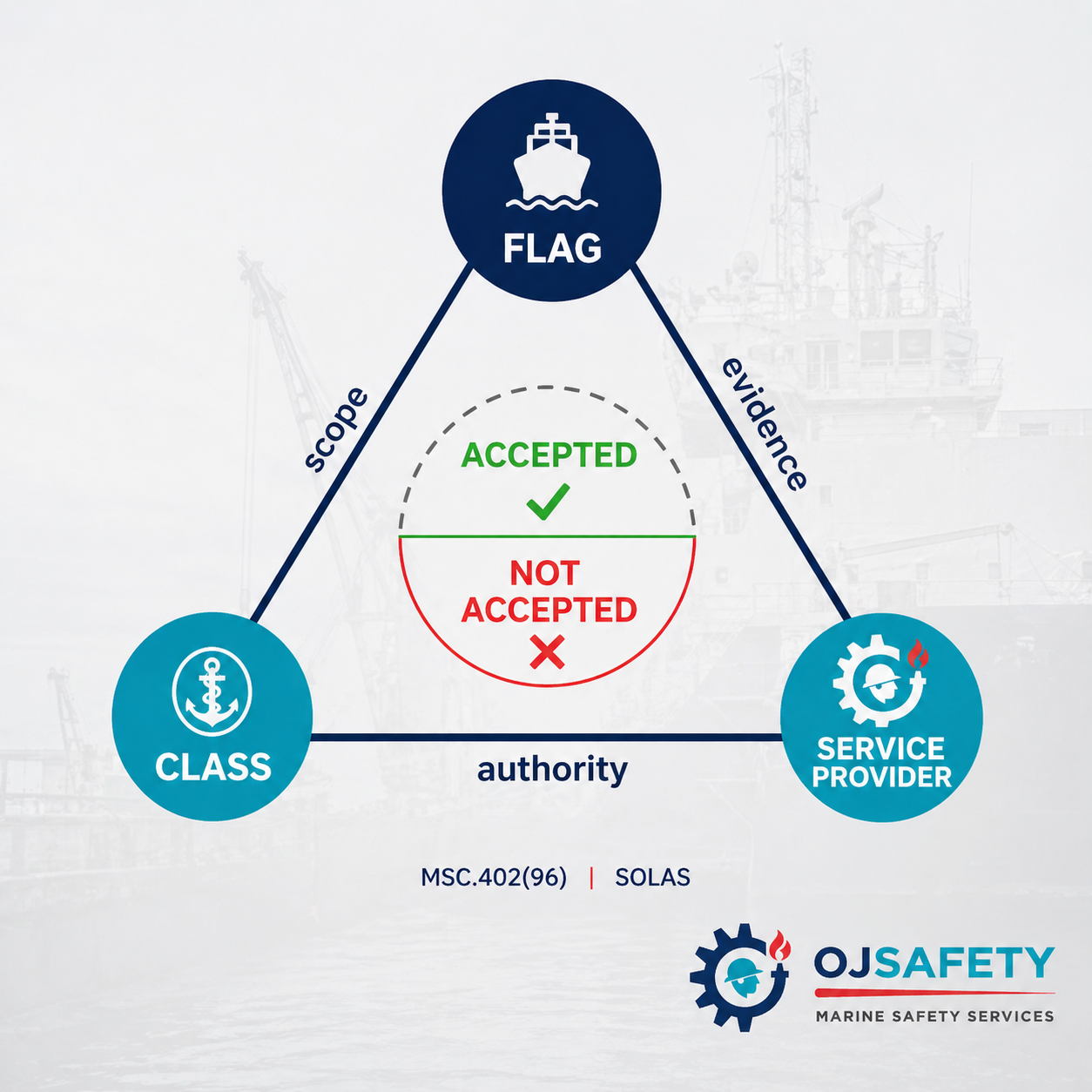
That is where ships get stuck. Not because the lifeboat, davit, or firefighting system is unsafe, but because approvals don’t line up on paper. This is what I mean by flag triangulation. You are trying to align three things at the same time: the vessel’s flag, the vessel’s class, and the service provider’s authorization route. Miss one corner, and you can end up with a clean job and a messy acceptance.
The matrix
Let’s keep it practical. There are three layers, and they are not the same thing.
First, the technical work. The job has to be done correctly. OEM procedures followed. Measurements taken with calibrated tools. Evidence captured. If the physical work is wrong, nobody will accept anything.
Second, class recognition. Class societies care about competence, traceability, and documentation they can read without guessing. If your report is structured, the evidence is clear, and the provider’s system is credible, class is usually calm. If the report is vague, the photos are weak, or the records look improvised, class starts asking questions. Questions become delays.
Third, flag authorization. This is the one people underestimate. Many flags require that the provider is authorized by the flag itself or accepted through a recognized organization pathway. Even when class is satisfied, the flag can still say, “Not valid for statutory purposes.” That is how you get a ship that is technically fine but administratively stuck.
The point is simple: class recognition makes your documentation comfortable. Flag authorization makes it legally valid.
Common pitfalls
Most approval failures are boring. That’s why they happen. People assume approvals work like a universal passport. They do not.
The first pitfall is assuming one approval covers the fleet. Mixed fleets are the norm. Different flags. Different class societies. Different trading patterns. A provider that works perfectly for one vessel can be questioned on the next one, even inside the same company. The job gets done, but the certificate gets challenged.
The second pitfall is scope confusion. Some operators treat LSA, FFE, fixed CO₂, foam systems, and portable extinguishers like separate worlds. PSC and auditors often see them as one safety posture. If the scope is not aligned early, you get partial attendance and the “we need another visit” problem.
The third pitfall is weak evidence. It is not enough that something was tested. You must be able to show it. Nameplates readable. Gauge readings visible. Calibration validity noted. Before and after for defects. Load and hold sequence captured. The more evidence looks improvised, the more approval routes get questioned.
The fourth pitfall is leaving endorsements for later. Later usually means after the vessel sails, when someone wants extra proof, and now you are trying to fix compliance from shore with emails and screenshots. In Baltic port calls and tight Northern Europe windows, “later” is how off-hire is born.
How OJ Safety clears them
We treat approvals as part of planning, not as a post-job argument.
Before attendance, we confirm the basics that decide acceptance: flag, class, vessel type, scope, and the port call window. Then we align the service plan to what that flag and class combination actually expects, not what someone hopes it will accept.
Then we build the evidence pack for first-look acceptance. Clean photo sets. Readable plates. Gauges with date markers. Load and hold proof where required. Short captions that remove doubt. A report that follows the scope in order, so a surveyor can approve without a phone call.
And when a direct approval route is not available for a particular flag and class mix, the worst idea is to wing it. The smart move is to handle it early, clearly, and in writing. Agree the acceptance route before work starts. Protect the vessel’s schedule.
For what we hold and how we operate, see our approvals and certifications page.
Proof wording that avoids misunderstandings
A lot of delays are caused by certificates that say too little. The wording should be factual and specific. Not marketing. Not vague.
Good wording tells the reviewer four things: what was done, where it was done, how it was verified, and what evidence supports it.
Example wording for LSA scope:
“Lifeboat and launching appliance inspection and servicing completed under documented procedures with traceable instruments and evidence pack. Work aligned with IMO MSC.402(96) expectations and presented in class-ready format for acceptance review.”
Example wording for FFE scope:
“Firefighting equipment inspection and servicing completed with documented readings, serial tracking, and calibration references. Records structured for audit and PSC review and acceptance by relevant class and flag requirements.”
Do not overpromise. Keep it measurable. That is what passes audits.
Why this gets stricter in 2026
The direction is clear across the industry: more traceability, more scrutiny on individual competence, and tighter controls on who is authorized to sign what. Digital records and consistency will matter more, not less. If you want the wider context, our 2026 IMO guidelines post covers where inspections are heading and why the acceptance layer becomes more important every year.
Bottom line
A ship does not get delayed because approvals are complicated. It gets delayed because someone ignored the approval pathway until the last minute.
Triangulate early: scope, evidence, acceptance route. Then the job finishes on time.